What the Data Actually Captures
Intro Content RunEasi produces a Running Quality Score — a percentile-based measure benchmarked against a reference dataset of runners from recreational to elite. That overall score is made up of three core metrics, each tracked independently and scored from 0 to 100%.
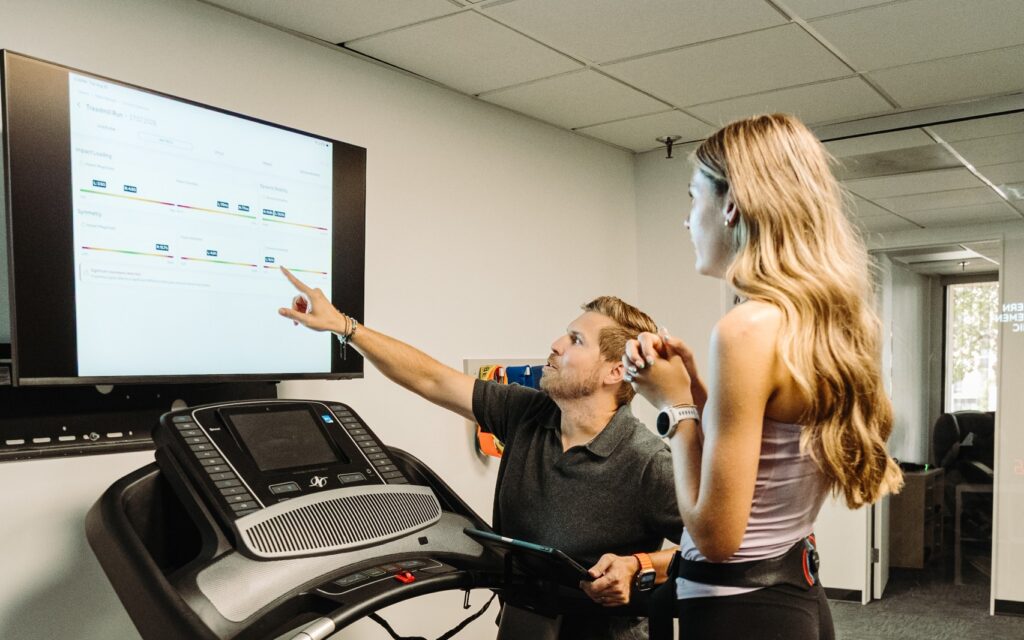
Running Quality — The Three Core Metrics:
Impact Loading How much mechanical force your body experiences with each footfall, and how quickly that force travels through your body. This is measured in two components: impact magnitude (in G-force) and impact duration (in milliseconds). Together they reveal whether you’re absorbing impact efficiently or concentrating it in ways that stress specific tissues. Runners with high impact magnitude and short duration tend to be more vulnerable to bone stress injuries and shin pain. Runners with low magnitude and long duration are often overstriding and passively absorbing shock through the wrong structures.
Dynamic Stability How much your hips move side-to-side during running, relative to forward propulsion. Technically, this is the proportion of hip movement in the lateral direction — energy that isn’t contributing to moving you forward. High lateral instability means your stabilizing muscles aren’t controlling pelvic movement effectively, which puts increased demand on structures like the IT band, hip flexors, and lower back. Dynamic stability is one of the most consistent predictors of overuse injury and one of the first things to break down under fatigue.
Symmetry The difference in running mechanics between your left and right leg. Some asymmetry is normal in every runner — what matters is whether it’s consistent, how large it is, and whether it’s getting worse. Significant, consistent asymmetry often reflects a compensation pattern — one side working harder to protect the other — and can persist for years after an injury even when pain has resolved.
Running Style Metrics (Spatiotemporal) Alongside the quality metrics, RunEasi tracks cadence (steps per minute), ground contact time, flight time, and flight ratio. These tell us how you run — whether you’re spending too long on the ground, underloading your push-off, or running in a style that’s creating more stress than necessary for your pace and build. Cadence in particular is one of the most common — and most correctable — contributors to running injury.