Injury Care
Elbow Pain
Tennis elbow doesn't require tennis. Golfer's elbow doesn't require golf. Elbow pain just requires a grip you use too often.

Mon/Wed: 10am–6pm
Tue/Thu: 7am–3pm
(later by appointment)
Lakewood Fri: 9am–12pm
Centennial Fri: 10am–2pm
(by appointment only)
Injury Care
Tennis elbow doesn't require tennis. Golfer's elbow doesn't require golf. Elbow pain just requires a grip you use too often.
Despite the names, tennis elbow (lateral epicondylitis) and golfer’s elbow (medial epicondylitis) rarely come from tennis or golf. They come from grip — repeated, loaded, and rarely rested.
While the names suggest specific sports, these conditions show up just as often from repetitive work tasks, weightlifting, or everyday activities that involve repeated gripping and forearm movement.
Because elbow pain is typically driven by overuse of the forearm muscles and tendons, effective treatment means addressing the underlying load and strength issues — not just the point of tenderness. At Modern Movement Clinic, we look at your grip strength, forearm mechanics, and training or activity load to understand what’s really driving your symptoms.
Elbow pain can present differently depending on which tendon is involved. These are some of the most common patterns we see.
Elbow pain typically develops from repetitive gripping or forearm movement combined with insufficient strength or recovery time in the affected tendons. Identifying which movement pattern is driving your specific pain is what shapes an effective plan.
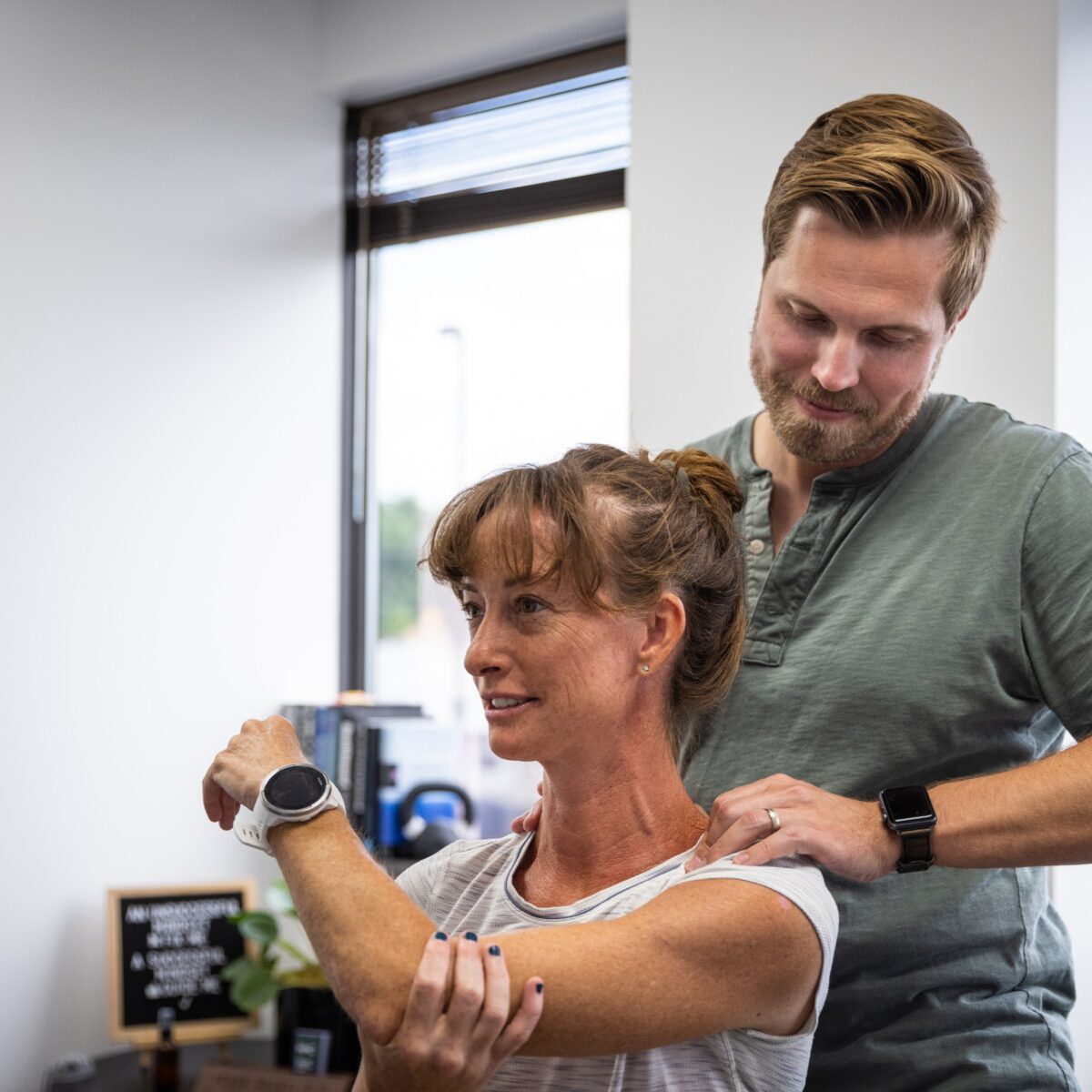
Evaluation starts with understanding your activity, work, or sport-related demands, along with a movement and strength assessment of the elbow, wrist, and forearm. We identify which specific tendon is involved and what movement patterns may be contributing to the irritation.
Depending on your activity, this may include assessing sport-specific movements like a racquet swing or golf swing, or work-related tasks that involve repetitive gripping. The goal is to understand not just where it hurts, but what’s driving the repetitive stress.

Not necessarily. In many cases, we can help you modify technique, grip, or volume while addressing the underlying tendon issue, rather than stopping completely.
Tennis elbow causes pain on the outside of the elbow and is aggravated by gripping and wrist extension, while golfer’s elbow causes pain on the inside of the elbow and is aggravated by wrist flexion. Both are forms of tendon irritation, just on opposite sides of the joint.
This depends on how long you’ve had symptoms and how consistently you follow the plan, but chronic tendon issues often take several weeks of consistent treatment to fully resolve.
Not usually. Most elbow pain tells us what we need through a grip and forearm assessment — imaging is reserved for cases that don’t respond as expected.
Yes, shockwave therapy is often effective for chronic tennis elbow or golfer’s elbow that hasn’t responded to rest or other conservative treatment. We’ll determine if it’s a good fit during your evaluation.
An accurate evaluation beats another wrapped-up elbow brace.