Methods & Technology
Movement & Biomechanical Assessment
Pain tells you where something is wrong. Movement assessment tells you why. We use a combination of functional testing and video analysis to find the real answer.*

Mon/Wed: 10am–6pm
Tue/Thu: 7am–3pm
(later by appointment)
Lakewood Fri: 9am–12pm
Centennial Fri: 10am–2pm
(by appointment only)
Methods & Technology
Pain tells you where something is wrong. Movement assessment tells you why. We use a combination of functional testing and video analysis to find the real answer.*
Most clinical evaluations focus on the painful area. They test the structure that hurts — range of motion, tenderness, strength at the site — and build a treatment plan around what they find there.
The problem is that pain is rarely the whole story. A runner with knee pain usually has a knee that’s doing exactly what it’s supposed to do given what’s happening above and below it. The knee is the victim, not the cause. Treating it in isolation gets temporary results at best.
A movement and biomechanical assessment takes a different approach. Instead of starting at the symptom, we start at the system — evaluating how your body moves across multiple planes of motion, how well you control load through your joints, and where mobility restrictions, stability deficits, or movement asymmetries are creating a breakdown in the chain.
We use a combination of functional tests informed by the Selective Functional Movement Assessment (SFMA) and Functional Movement Screen (FMS) frameworks, adapted to your presentation and goals. These tests examine how you move in multiple directions — not just forward — and include acceleration and deceleration demands that expose deficits that static testing misses entirely.
Video analysis runs alongside the physical screen. Slowing your movement down on screen makes compensation patterns immediately visible — and more importantly, immediately understandable to you. You see what we see. That changes the conversation from “trust me” to “now you understand.”
Together, the movement screen and video analysis give us a clear picture of what’s actually driving the problem — and what needs to change to solve it.
This assessment is the foundation of care for most people who come to Modern Movement Clinic. If you’re dealing with pain, trying to return to activity, or want to understand why the same problem keeps coming back, this is where we start.
Plan to move. The assessment involves functional positions and movements — not just passive testing on a table. Wear something you can move freely in. Most assessments take place during your initial visit and are integrated into the full evaluation alongside your history and any additional clinical testing.
You leave with a clear understanding of what we found and what it means. We explain the connection between your movement findings and your injury in plain language — no jargon, no vague explanations. Following your visit, you’ll receive a comprehensive written summary and personalized plan by email, the same thorough follow-up included with every MMC visit.
The movement assessment isn’t a standalone service — it’s the foundation that every treatment plan is built on. What we find in the screen determines what we prioritize in treatment: where manual therapy is useful, what strength work is most relevant, and how to structure your progression back to full activity. We return to movement testing periodically throughout care to track whether things are actually changing.
Most standard evaluations focus on the area that hurts — testing range of motion, tenderness, and strength at the painful site. Our movement assessment looks at the whole system: how you move across multiple planes of motion, how well you control load through your joints, and where your movement patterns are creating stress on specific structures. The goal isn’t just to identify what’s painful. It’s to identify why — and that usually involves looking well beyond the symptom.
Most daily movement — and most clinical testing — happens in one plane: forward and backward. But your body moves in three dimensions, and most injuries develop from how you handle load in the other two. Multi-planar testing evaluates how you move side-to-side and rotationally as well — the directions where stability deficits and mobility restrictions most commonly hide. Acceleration and deceleration demands are also tested, because stopping and changing direction expose movement problems that steady-state movement doesn’t.
Not at all. The movement screen is relevant for any active person — regardless of sport, activity level, or injury type. Runners, cyclists, swimmers, weightlifters, recreational athletes, and active adults dealing with pain or movement limitations all benefit from understanding how their body is actually moving and where the gaps are.
The movement assessment informs the clinical picture and helps identify contributing factors — it doesn’t replace a full clinical evaluation or imaging where that’s warranted. What you will leave with is a clear explanation of what we found, how it connects to your injury or limitation, and what the plan is to address it. Most people find that more useful than a diagnosis label anyway.
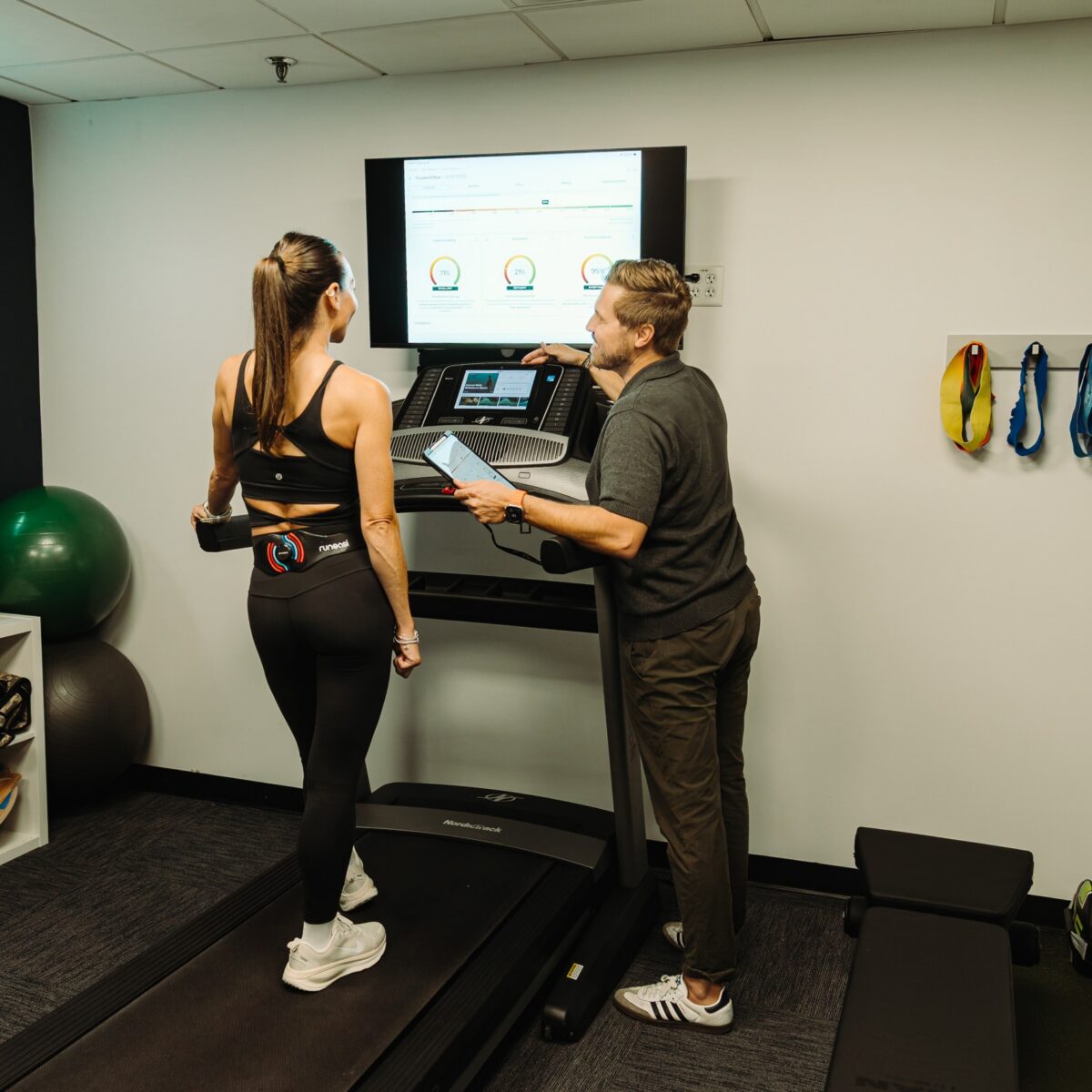
They measure different things and work best together for runners. The movement screen evaluates your underlying capacity — mobility, stability, and motor control before you start running. RunEasi measures what actually happens during running — impact forces, hip stability, and left-right symmetry across thousands of steps. A restriction found in the movement screen often directly explains an asymmetry or instability flagged by RunEasi. For runners, we use both. For non-runners, the movement screen and video analysis are the primary tools. Learn more about running gait analysis.
Yes. The movement assessment is part of the initial evaluation — it’s not a separate charge. A running assessment (90 minutes) is $300. Questions about pricing and what’s included are always welcome before you book — reach us at hello@modernmovementclinic.com or 720-925-5950.
Understanding how your body actually moves is the first step toward fixing what's wrong. Schedule an evaluation and find out what's really going on.