Injury Care
Neck Pain
Neck pain doesn't need a workout to start. A bad night's sleep or a long day at a screen will do just fine.

Mon/Wed: 10am–6pm
Tue/Thu: 7am–3pm
(later by appointment)
Lakewood Fri: 9am–12pm
Centennial Fri: 10am–2pm
(by appointment only)
Injury Care
Neck pain doesn't need a workout to start. A bad night's sleep or a long day at a screen will do just fine.
Your neck holds up a bowling ball’s worth of head, all day, usually tilted forward at a screen. It’s not exactly a design built for modern life — and posture, muscle strain, and restricted mobility in the upper back all take their turn contributing.
Cervical muscle strain and postural neck pain are especially common among people who spend long hours at a desk, look down at phones frequently, or carry tension in the neck and shoulders from stress. Athletes can also experience neck pain from repetitive movement patterns or from compensating for restrictions elsewhere in the upper back and shoulders.
Because the neck works closely with the upper back and shoulders, persistent neck pain is often influenced by limitations in those connected areas — not just the neck itself. At Modern Movement Clinic, we assess the full picture, so treatment addresses what’s actually driving your discomfort.
Neck pain can show up differently depending on the underlying cause. These are some of the most common patterns we see.
Neck pain typically develops from a combination of posture, muscle tension, and restricted mobility in the neck and upper back. Identifying which of these factors applies to your specific pain is what shapes an effective plan.
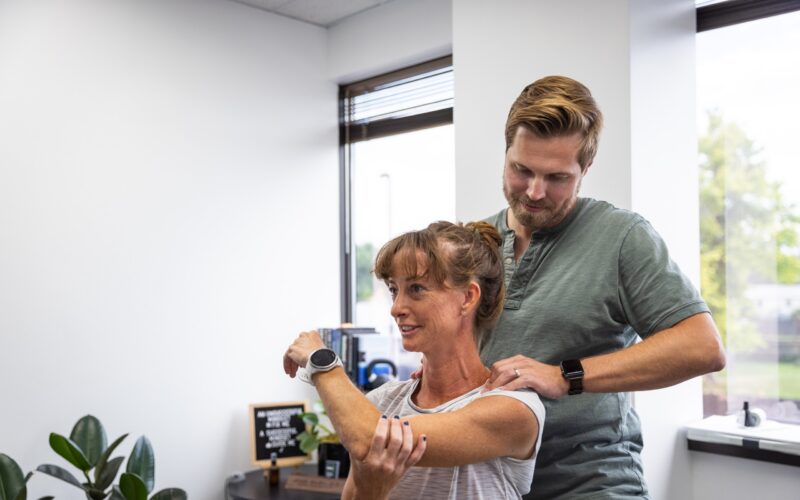
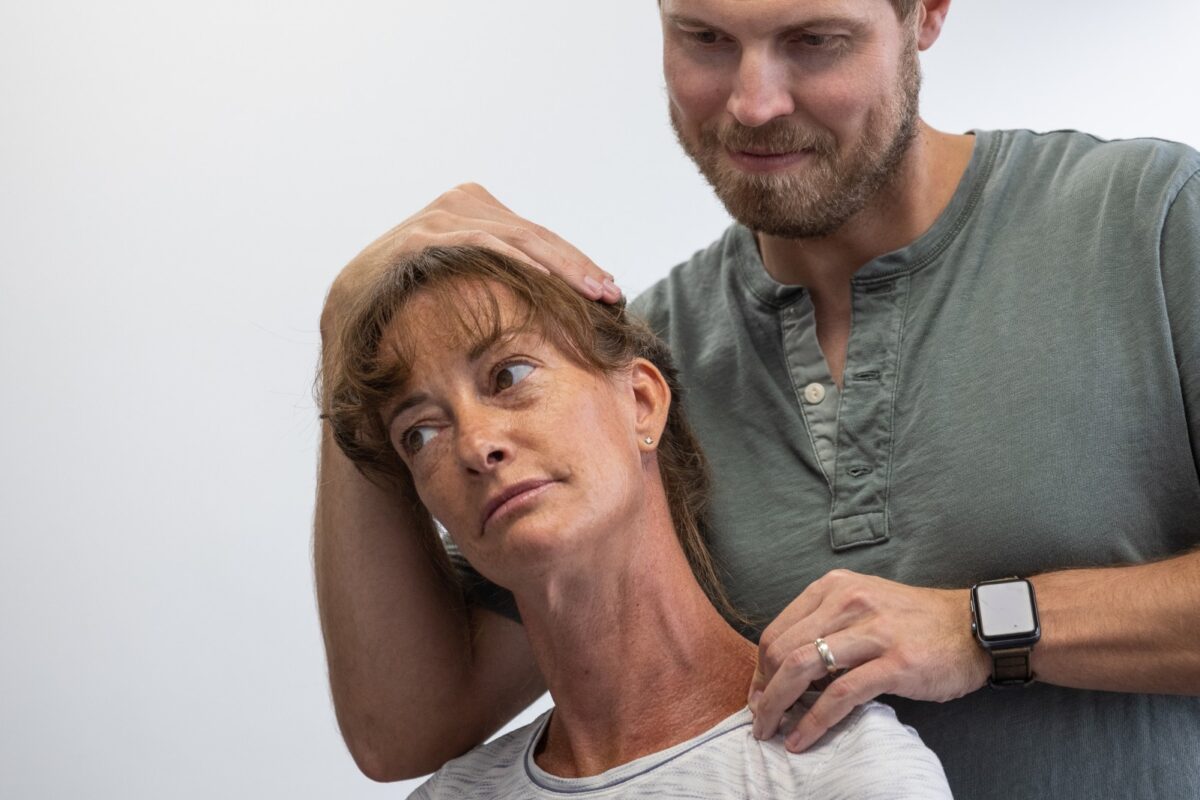
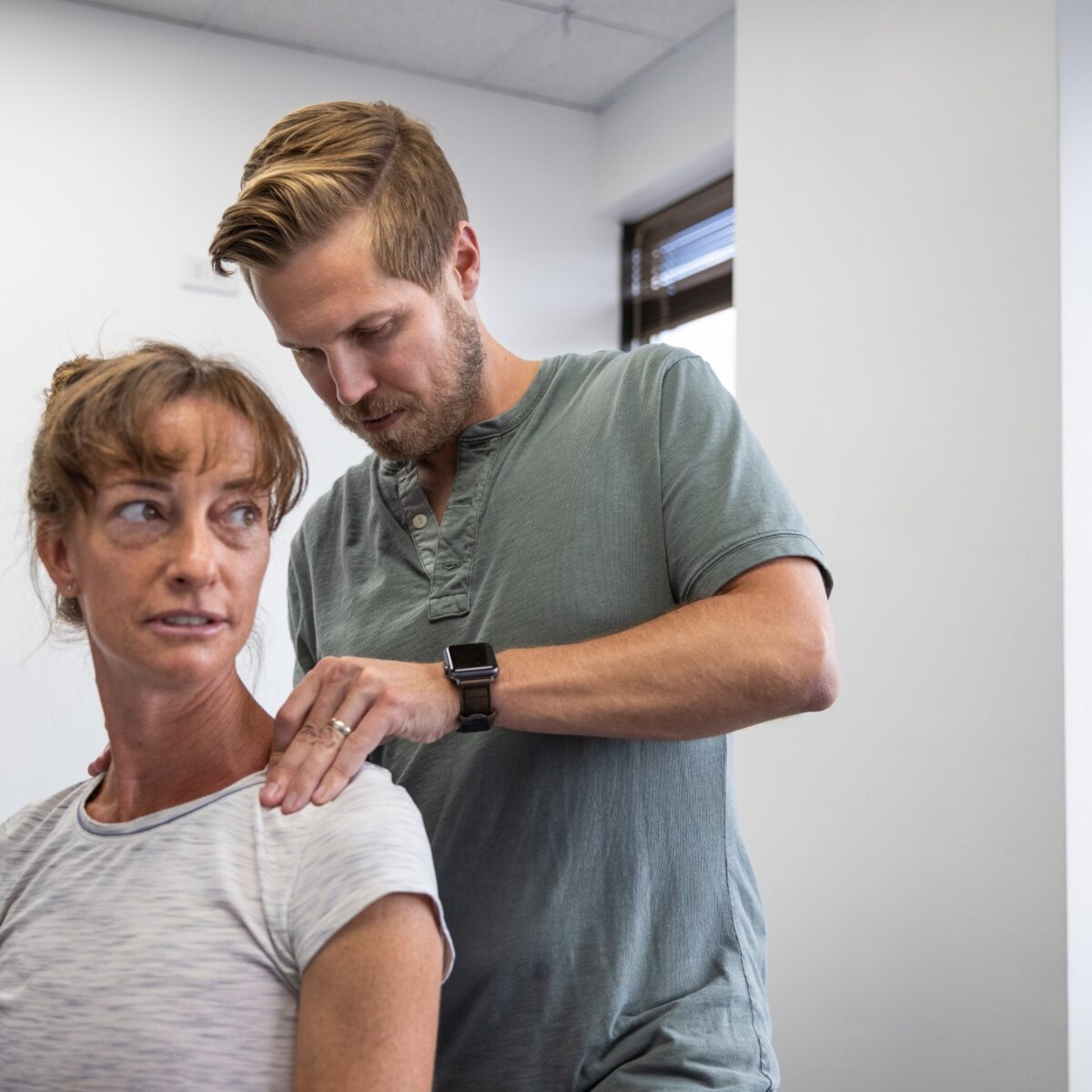
Evaluation starts with understanding your pain patterns, daily habits, and any related symptoms like headaches or restricted motion. From there, we assess mobility and strength throughout the neck, upper back, and shoulders to understand what’s contributing to the issue.
We pay close attention to posture and how these connected areas are working together, rather than assessing the neck in isolation. This gives us a clearer picture of whether the issue is coming from muscle tension, restricted mobility, postural strain, or a combination.
Often both. Stress can contribute to muscle tension in the neck and shoulders, while posture and mobility restrictions play a physical role as well. We look at the full picture rather than assuming it’s just one or the other.
Yes, tension in the neck and upper back muscles is a common contributor to certain types of headaches. Addressing the underlying neck tension can often help reduce headache frequency as well.
Not usually. A thorough movement and postural assessment tells us most of what we need — imaging comes in for suspected nerve involvement, not routine stiffness.
It can help reduce contributing factors, but it’s rarely the whole solution if there’s already a mobility restriction or muscle imbalance present. We typically address both the habits and the underlying physical factors.
This depends on the cause, how long you’ve had symptoms, and how consistently you follow the plan. We’ll give you a realistic picture after your evaluation.

An accurate evaluation beats another new pillow.